
Sports Fence in Toledo, OH
A sports fence isn’t just about keeping a ball in bounds. It’s what separates a put-together facility from one that looks like nobody’s paying attention. Whether you’ve got a baseball field, a tennis court, a batting cage, or a driving range, the fence is one of the first things people notice and one of the last things people think to budget for properly.
We do sports fence installation in Toledo for homeowners, schools, rec centers, and sports organizations across Lucas County and the surrounding area. If you want it done right the first time, here’s what you need to know.
What Kind of Sports Fence Do You Actually Need
Not every sports fence is the same, and not every fence company understands the difference. Here’s what we install and what goes into each one.
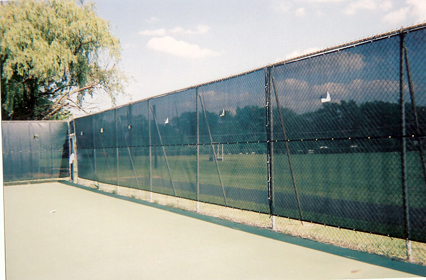
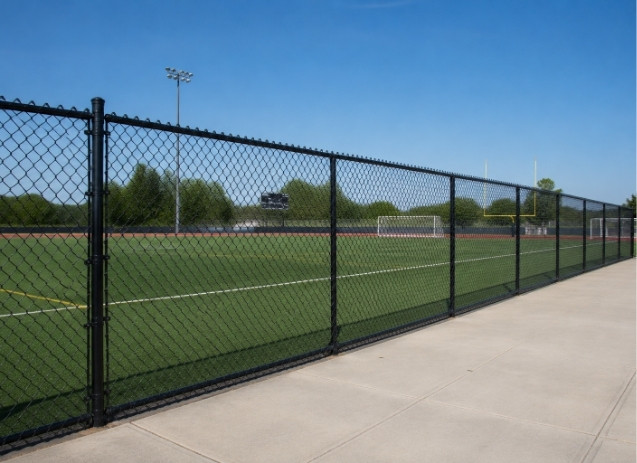
Tennis Court Fence — We use vinyl-coated chain link in black or dark green. It cuts glare and makes the ball easier to track during play. Heights run 10 feet on the sides and up to 12 feet on the ends. Post spacing and tension have to stay consistent across the whole run or the fabric starts to belly out. We also install windscreens where needed, which attach to the chain link framework and help with both privacy and wind interference on the court.
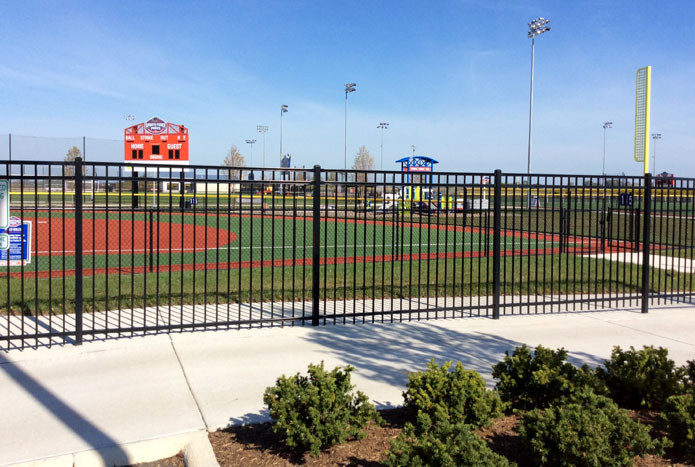
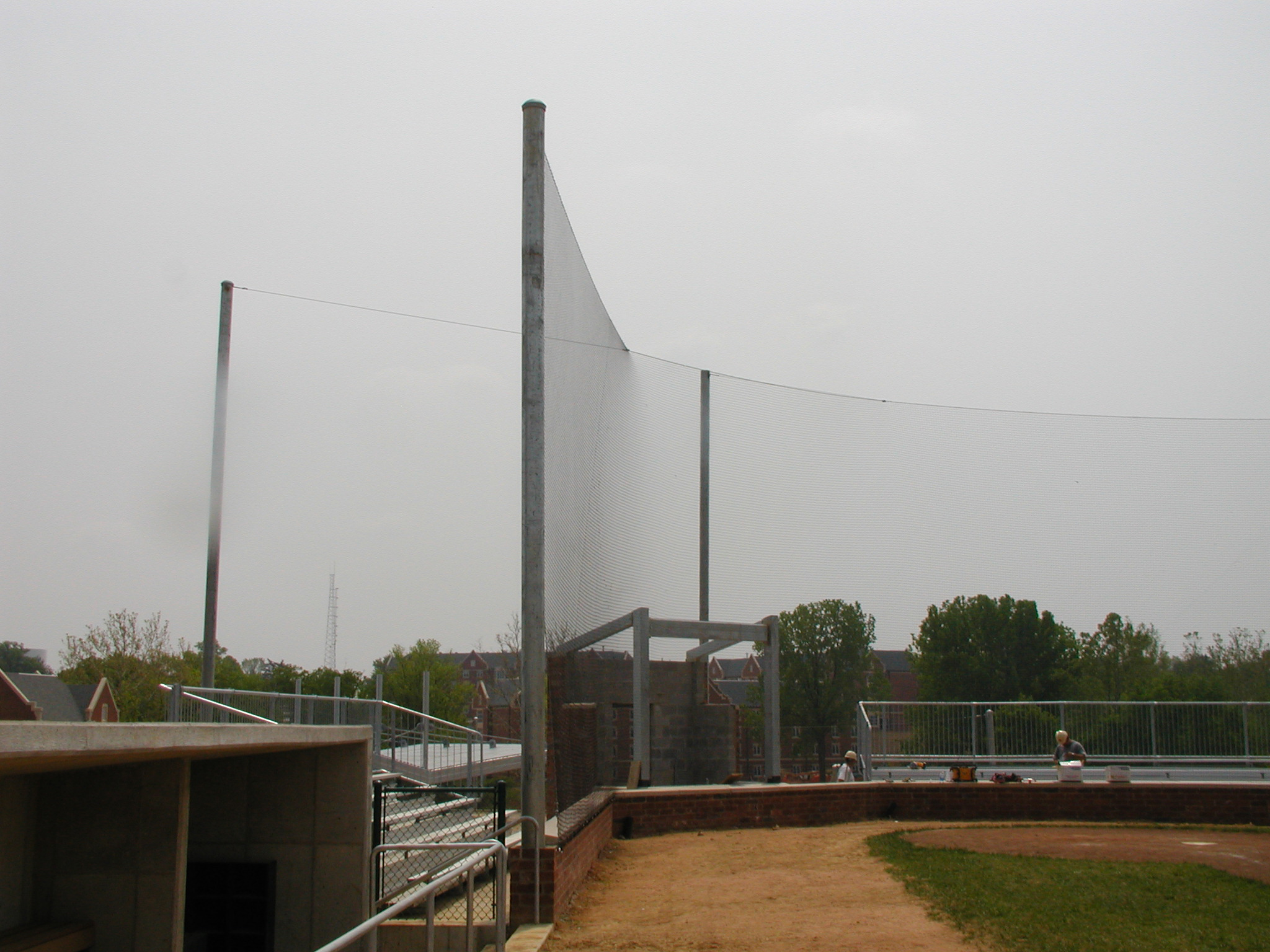
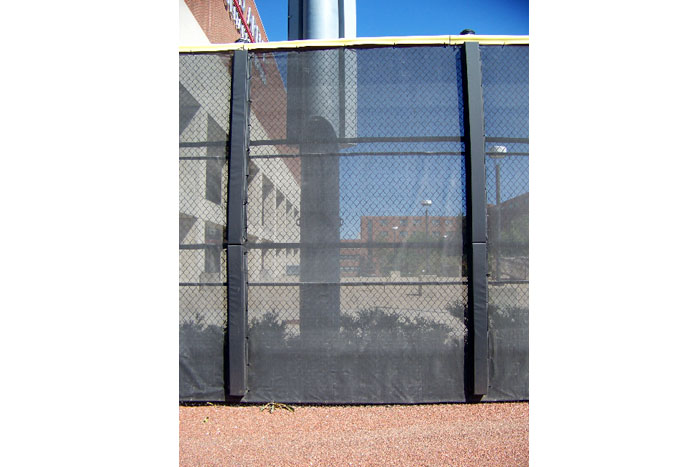
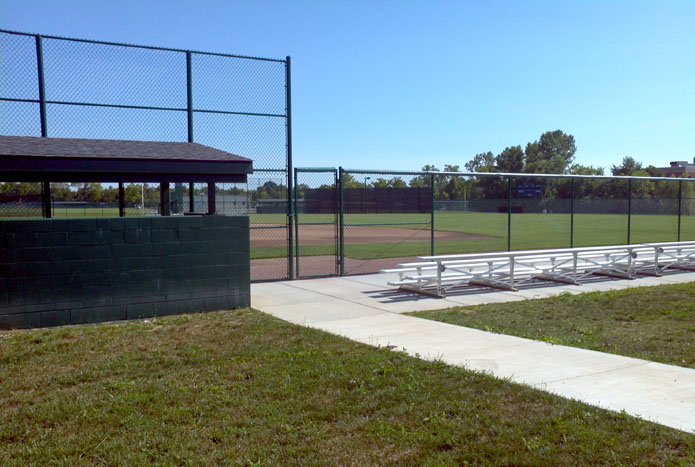
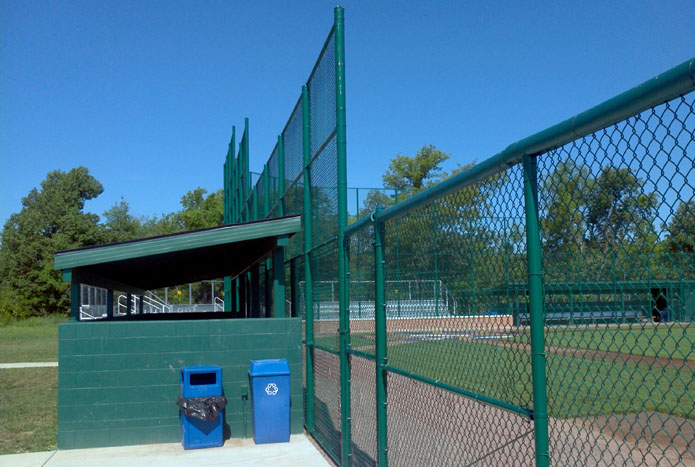
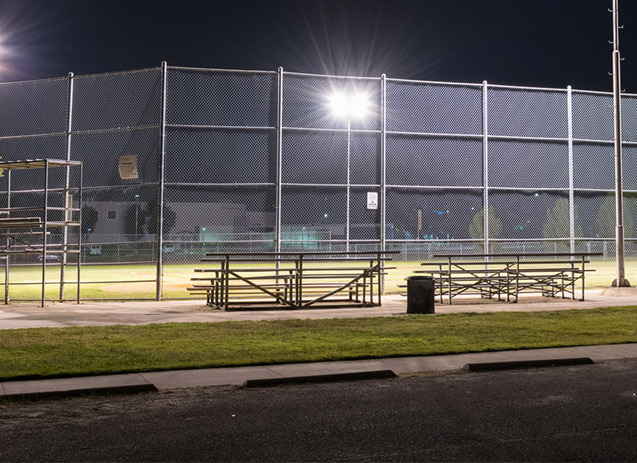
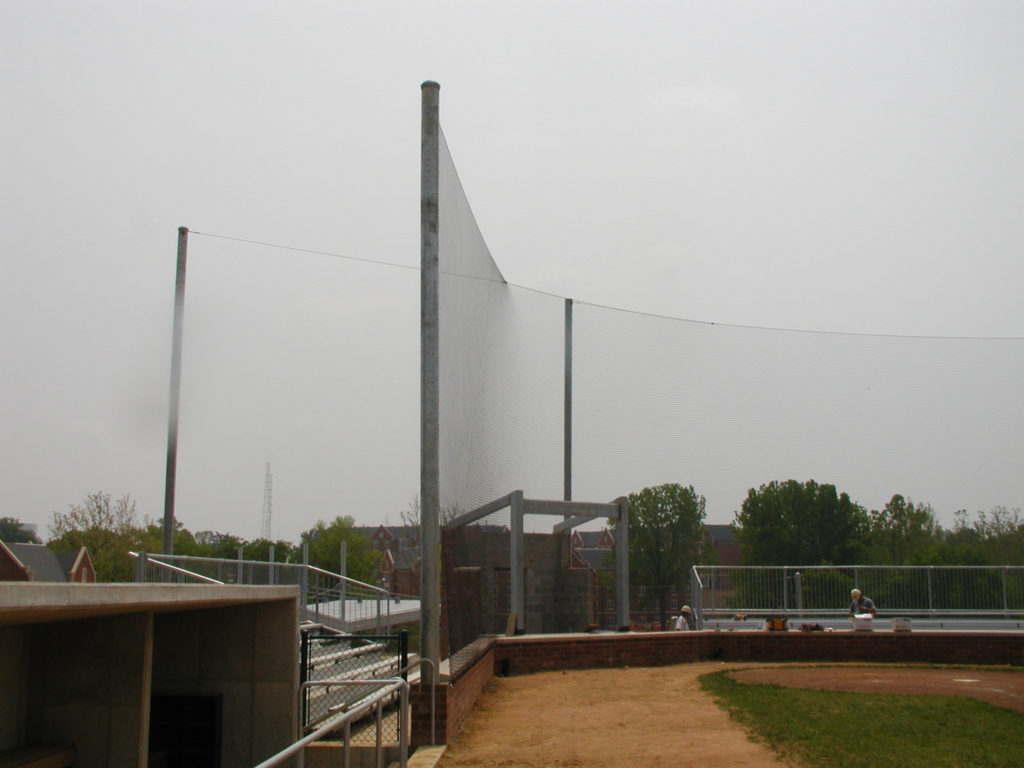
Baseball and Softball Field Fence — This is the most involved sports fence job there is. The backstop, outfield fence, and dugout enclosures all have different specs. The backstop takes the hardest hits, so those posts go deep in concrete with heavy gauge wire. The outfield follows a curve, and getting that arc right takes experience. For youth leagues and rec fields around Toledo that aren’t ready for a permanent outfield fence, we also do portable sports fence setups that define the field and make the space playable.
Golf Course and Driving Range Barrier — Range barriers are built to stop golf balls, so height is everything. Depending on what’s behind the range, these run anywhere from 20 to 50 feet tall. The posts are structural and sized for the wind load that comes with that height. For golf course perimeter fencing, we use options that don’t look industrial because members and guests see it every day.
Portable Sports Fence vs. Permanent Installation
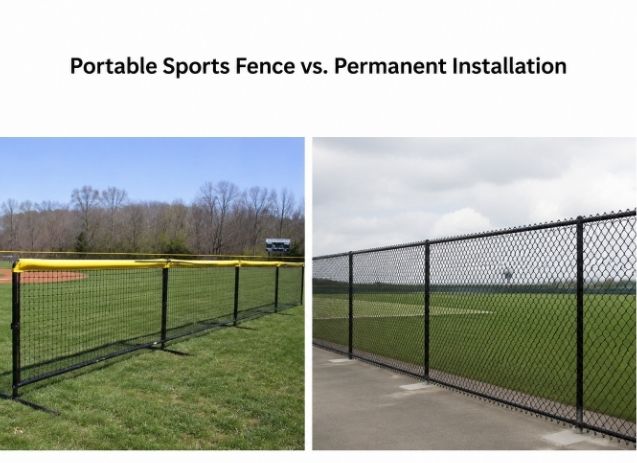
If you’re using a shared space, like a park, a church lot, or a field that gets repurposed during the week, a portable sports fence can make sense. You set it up, play the game, take it down. Lower upfront cost, flexible, easy to move around.
But portable has real limits. It shifts during play. It doesn’t look clean. And after a few seasons of setting it up, breaking it down, and replacing worn parts, the cost adds up fast. Most rec leagues in Toledo, Sylvania, and Perrysburg that start with portable end up calling us for a permanent install within a season or two. Once you see how much easier it is to just have it there, the decision gets obvious.
For anything that gets regular, heavy use, permanent installation is the right call. And that means doing it right from the ground up.
What Goes Into a Proper Sports Fence Installation in Toledo
This is where a lot of jobs get cut short, and where the problems start.
Post depth. Ohio’s frost line is around 36 inches. We set every sports fence post at least that deep, in concrete. Posts that aren’t deep enough heave out of the ground when the freeze-thaw cycle hits. It’s not a matter of if, it’s when. We’ve pulled out plenty of posts from other companies’ jobs that were sitting in nothing but compacted dirt.
Wire gauge. For sports applications, 9 gauge is the standard. Lighter wire stretches and sags under regular ball contact. If a company is quoting you 11 gauge on a backstop or a batting cage, ask them why.
Tension. Fabric has to be stretched properly and attached at the right points. A fence that wasn’t tensioned right looks bad from day one and gets worse every season. This is one of the most common things we see wrong on fences that were installed cheap.
Gate hardware. Gates on sports fields open and close constantly and take a lot of abuse. We use heavy-duty hinges matched to the gate weight. A gate that won’t latch on a sports field is both a daily headache and a liability.
Toledo winters make all of this matter more. Freeze-thaw cycles, ice loads, dry summers that shift the ground, a fence that wasn’t built to handle that is going to show it fast. Built right, it holds up without problems.
Get a Quote From a Sports Fence Company in Toledo
We’re not a general fence company that occasionally does a sports job. Sports fencing is a real part of what we do at American Fence & Supply, and we’ve done it for schools, rec centers, youth leagues, and homeowners across the Toledo area.
If you’re ready to talk Fence Installation project, give us a call or fill out our contact form. We’ll come out, look at the space, and give you a straight answer on what it’s going to take, no guesswork, no vague quotes.
What type of fence is best for a sports field?
Chain link is the standard. It handles ball impact, holds tension, and holds up through Ohio winters. For tennis courts, vinyl-coated chain link in black or dark green is the better option. It cuts glare and lasts longer.
How tall does a sports fence need to be?
It depends on the sport. Tennis courts run 10 feet on the sides, up to 12 on the ends. Baseball backstops start at 20 feet behind home plate. Driving range barriers go anywhere from 20 to 50 feet. We size every job based on the actual space.
How much does a sports fence cost in Toledo?
Chain link runs $8 to $40 per linear foot installed, but sports fencing costs more than a standard residential job because of post depth, wire gauge, and height requirements. A baseball backstop or full court enclosure will cost more than a simple perimeter run. The only way to get an accurate number is to have someone look at the space.
Do I need a permit for sports fence installation in Toledo?
Most permanent installations do, especially on school or commercial property. We handle the permit process as part of the job so you don’t have to chase it down yourself.
Should I go with a portable sports fence or a permanent one?
Portable works for shared spaces used for different things throughout the week. For anything with regular, consistent use, permanent is the right call. It stays put, looks better, and costs less over time than replacing portable parts every season.
Our Completed Fence Projects Across Toledo and Surrounding Areas
Wondering how many property owners across Toledo have trusted American Fence & Supply for their fencing projects?
Our custom project map highlights completed installations throughout the city, showing real residential, commercial, and industrial properties where our team has delivered professional results.
From commercial chain link fence and ornamental steel to vinyl, wood, aluminum, sports fencing, industrial fencing, and cable bullet railing, this map reflects the work we complete every day right here in Toledo.